EL CEMENTERIO EN TULCÁN, PROVINCIA DE CARCHI
The Cemetery in Tulcán in the province of Carchi


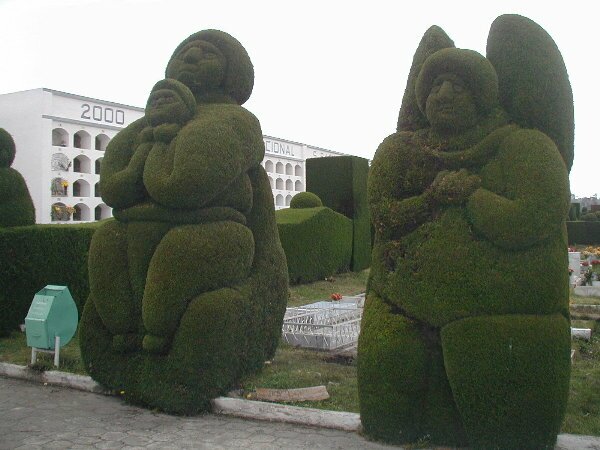
 Puesto en la provincia de Carchi, Tulcán es una de las entradas al norte del país, hacia Colombia a solo 6km. Tiene un mercado atractivo en los domingos. La populación es solo 53,000 y el pueblo está a la elevación de 3000m de altura. Las calles estan generalmente largos y estrechos, metidos entre casas de los residentes locales.
La mayor atracción, desde 1936, para las turistas aquí, es el cementerio jardín ornamental con una variedad de formas creativas incluyendo ángeles, animales, y figuras geométricas. Está localizado dos bloques del Parque Ayora y vale la pena visitarlo. El creador, Sr. José Franco, quien está enterrado en el cementerio, dejó una oda intrigante de su cementerio artístico que dice, -En Tulcán, un cementerio tan bello que se invite a morir.- Hoy, los cinco hijos del Sr. Franco continuen en su tradición familiar de jardinería ornamental y están haciendo un grán trabajo esculturando estas formas esquisitas. (traducido de la página web de lo mejor del ecuador)
Set in the Province of Carchi, Tulcán is the entry point to the far
north of the country into Colombia just 6km away along with an attractive market
on Sundays. The population is just 53,000 and the town is set at an elevation of
3000m above sea level. The streets are generally very long and narrow and
crammed between the homes of local residents.
The biggest attraction dating back to 1936 for the tourists here is
the topiary garden cemetery featuring a wide variety of imaginative forms
and shapes including angels, animals and geometrical figures and is located 2
blocks from the Park, Parque Ayora and is well worth a visit. The deceased
creator Sr. José Franco who is actually laid to rest in the cemetery left an
intriguing written ode of his topiary cemetery which states “In Tulcán, a
cemetery so beautiful that it invites one to die”. Today the five sons of Sr.
Franco continue on with their topiary family tradition and are doing a grand job
in sculpturing these exquisite forms. (credit description directly from the best of ecuador web page)


